


Recognizing Foreign Information Manipulation and Interference

When we hear about “foreign information manipulation and interference,” it can sound very abstract and difficult to understand.

Researchers have developed simple frameworks that help us identify how these campaigns work. Rather than getting lost in a sea of ​​technical terms, we can think of FIMI as a jigsaw puzzle: we need to see who makes it, how it’s put together, what it uses, and why.

vladimir gjorgieski intervju respublica 1 1

ABCDE framework

The ABCDE framework is one of the most widely used tools. The name is derived from five English words: Actor, Behaviour, Content, Degree and Effect.

1. Actor

First, we are looking at who the actor is, that is, who is behind the campaign. It could be a foreign country, a group close to a government, or even a private company working in their interest.

2. Behavior

It’s very important to observe the behavior. That means monitoring how information is being spread. Are there hundreds of newly created profiles posting and sharing the same content all at once? Are the messages appearing at the same time and with the same tone?

Such inauthentic behavior is often a stronger sign of FIMI than the content itself. During the 2018 “Yellow Vest” protests in France, for example, researchers observed thousands of new profiles on Twitter using the same hashtags, although the content was not always fake. The goal was to amplify anger and increase division.

fimi corruption
fimi breaking news
3. Content

The content can be fake, but also true information taken out of context.

Often the most dangerous thing is when accurate facts are presented in a way that creates doubt or fear. For example, during the pandemic, some information about vaccines was accurate but was presented selectively to cause panic.

4. Degree

The degree indicates how large the operation is and how far it reaches. Does the campaign use only one social network or does it spread across multiple languages ​​and media?

Such activities often begin through official channels, such as state media or embassies, and then spread through informal pages and groups.

5. Effect

The last thing is the effect. The question is: “What has changed?”

Have people lost trust in institutions, journalists, or politicians? Have divisions in society increased? For example, some campaigns have succeeded in creating a sense that the elections were “rigged,” even though there was no evidence of this, leading to distrust and protests.

Why is this important to us?

In an era when information travels fast, FIMI is becoming a powerful weapon. It does not use tanks and missiles, but rather Facebook posts, tweets or TikTok videos. The problem is that it often looks “legal” and is therefore difficult to detect. But the consequences are very real: a decline in trust in institutions, confusion among citizens and a weakening of democratic processes.

For us, as citizens, it is most important to know that not every piece of information we see is spontaneous or random. Sometimes there is a strategy behind it.

If we know how to recognize when someone is trying to divide or scare us, we are already a step forward in protecting ourselves from such threats.

A citizen scrolling through social media might see a viral post, unaware that it was published by a troll farm in St. Petersburg, amplified by botnets, and downloaded by secret proxies disguised as influencers or media platforms. By the time it enters mainstream discourse, it has already accomplished its purpose: to undermine democracy.

Case Study: “Hypertea” and the abuse of Dragan Danilovski M.D.

When an advertisement for “Hypertea” tea appeared on social media, many people noticed it because it used the image and name of Dragan Danilovski M.D. The video appeared as he was promoting the product and recommending it for treating high blood pressure and other serious illnesses.
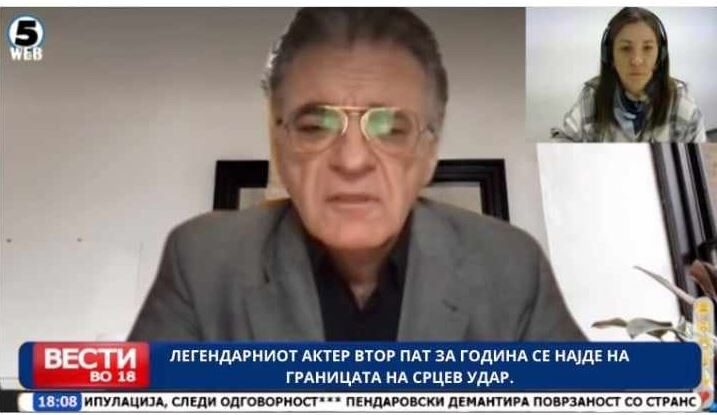
fimi danliovski zloupotreba e1760690610938

Fake photo portraying Dr. Danilovski on national TV station “Kanal 5” as promoting the tea.

But the truth is that the doctor never gave such an interview, nor did he endorse this product. This is a classic example of abuse, which can be explained through the ABCDE framework.

First, we must look at who the actor is in this case. There is no well-known media outlet or official institution behind the advertisement is, but anonymous people or companies who want to sell a product with dubious properties. They abuse the authority of public figures to appear more credible. In this particular case, in addition to Danilovski, some versions of the advertisement also abuse the name of the political analyst Petar Arsovski.

Then we look at the behavior. Here we notice coordinated activity – ads with identical content appear on multiple pages and groups, use the same style, and lead to fake websites that look official. This is not a spontaneous spread of information, but a carefully organized campaign.

Third, the content analysis shows us that it is a mixture of truth and deception. It is true that Danilovski is a reputable doctor, but it is a lie that he endorses “Hypertea”. His photos, fabricated interviews and false patient testimonials are used to create the impression that the product is medically proven.

The fourth element is the degree of prevalence. The ads did not appear in just one place, they were massively placed through social networks, reaching thousands of people. The campaign involved multiple channels, which indicates a greater investment and more serious organization.

And finally, the most important thing is to look at the effect. For some citizens, this advertisement seemed convincing and could have made them spend money on an unproven product.

Even more dangerously, people with health problems could stop their treatment believing that the tea would help them. In addition to the financial damage, such campaigns also undermine trust in doctors and public figures, as citizens begin to wonder whether or not someone is really involved.

This analysis clearly shows that the case of “Hypertea” is not just fake advertising. It is an example of organized information interference that uses manipulation of content, behavior, and authority to achieve its goal: profit at the cost of people’s health and trust.

Related resoruces

Why am I seeing videos with fake doctors on social media?

Applying the DISARM framework through an example of FIMI

How can you archive online content that may disappear?

What’s behind TikTok challenges?

OSINT tools for journalists

Even when they tell you the (partial) truth, they can still manipulate you