
Anatomy of Information Warfare: DISARM Framework
Foreign actors increasingly exploit FIMI in order to create division, fear, and distrust in institutions. Instead of launching open attacks, they infiltrate our information systems through social networks, news portals, comment sections, and videos.
In order to counter this new form of influence, the first step is to understand its anatomy. This is where the DISARM framework comes in – one of the world’s most innovative systems for disinformation analysis.

What is DISARM and Why It Was Created
DISARM stands for Disinformation Analysis and Risk Management.
It is an open – open – source methodology that provides a standardized way to track, describe, and understand information manipulation campaigns.
The framework was developed by the DISARM Foundation, in collaboration with cybersecurity and information operations experts, and inspired by the renowned MITRE ATT&CK framework used by security services globally to track cyberattacks.
Imagine MITRE ATT&CK as a map of the tactics hackers use to gain access to a computer. DISARM is essentially the same — except it maps how the public is ‘hacked’ through information.
The main goal of DISARM is to establish a common language and structure that allows governments, media, fact-checkers, and researchers to analyse and compare the same phenomena. This shared taxonomy enables coordinated and faster responses to disinformation.
How DISARM Works
DISARM divides information manipulation activities into three analytical levels:
1. Tactics
The strategic goals of the actor (e.g., to create fear or mistrust).
2. Techniques
The methods used to achieve those goals (e.g., fake profiles, edited videos, coordinated posts).
3. Procedures
The concrete steps, tools, and platforms used to implement the techniques.

Essentially, DISARM functions as a catalogue of all possible ‘weapons’ in information warfare, enabling analysts and journalists to classify what they observe and determine whether it is an isolated incident or part of a coordinated operation.
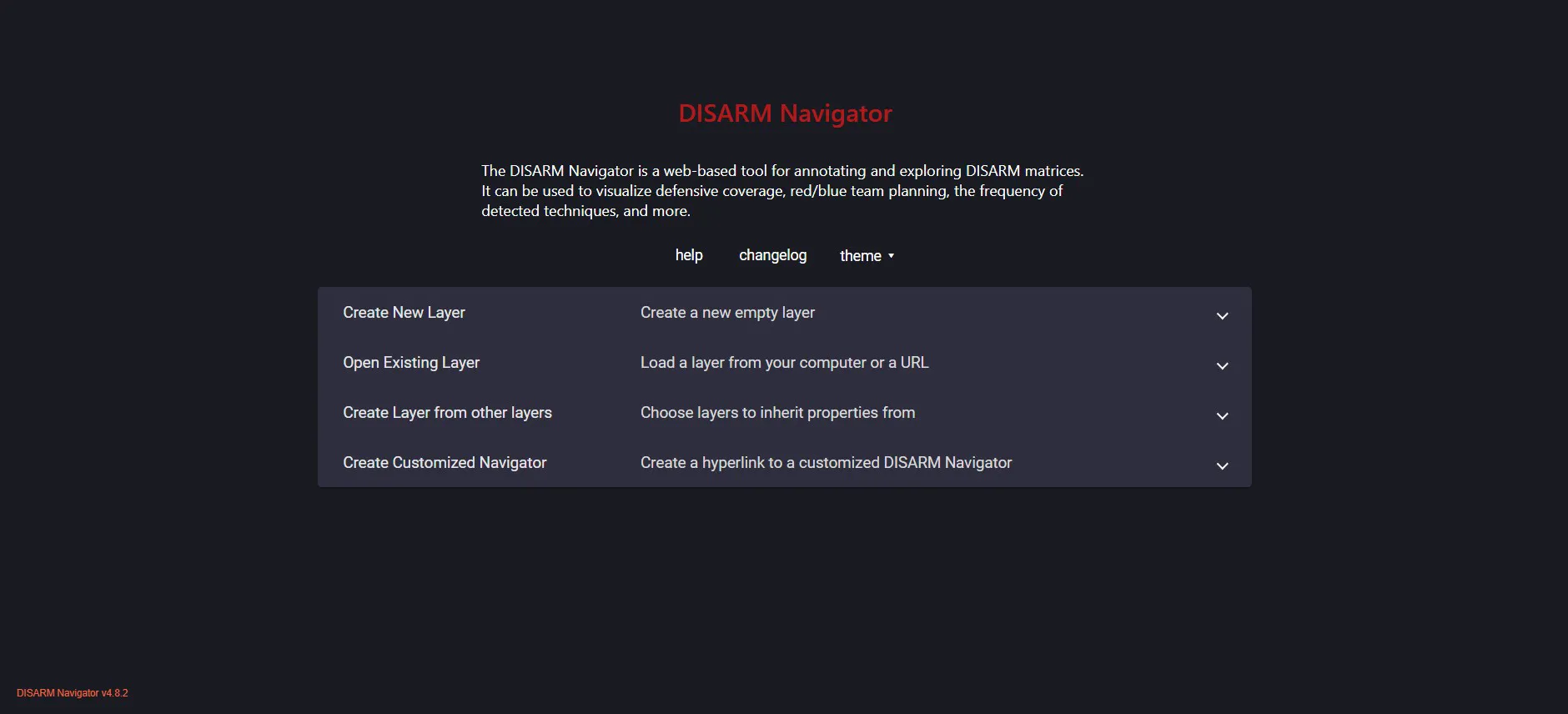
DISARM Navigator – A Digital Laboratory for Manipulation Analysis
DISARM would be challenging to utilize effectively without a dedicated tool. This is precisely why the DISARM Navigator was developed — a free web-based platform that facilitates the visual analysis and tracking of techniques employed within disinformation campaigns.
Navigator works as an interactive laboratory:
- Each user can create their own project or ‘matrix’.
- In that matrix, they add which techniques are used in a specific case (for example: Amplification – Coordinated Messaging).
- The system automatically visualizes the relationship between techniques and shows how they build on each other.
This is crucial, as disinformation rarely acts in isolation. It spreads across multiple channels using a mix of text, visuals, and social media. The Navigator helps reveal the underlying pattern, showing how an entire campaign can be constructed from a single small falsehood.
Example of use:
- The researcher notes a news story that claims that ‘vaccines cause infertility.’
- Navigator classifies it as Narrative – Harmful Health Claims.
- It then adds that the same message is spread across dozens of new profiles (Amplification – Coordinated Messaging).
- Navigator shows that these profiles are related and that techniques are repeated across different cases.
With a few clicks, the researcher sees the ‘network of influence’ as multiple small fake news stories coalesce into a coordinated attack.
Such visualisation is of invaluable importance to government analysts, journalists, academics, and civil society organizations, as it enables responses not only to single cases but to broader manipulation strategies.
The Red and Blue Frameworks of DISARM
DISARM consists of two two main components– the Red Framework and the Blue Framework, functioning like two sides of the same coin: one explains the attacks, the other builds the defence.
Red Framework – Anatomy of the Attack
The Red framework describes the behaviour of manipulators.
It was created to provide researchers with a clear structure for tracking disinformation campaigns and helps them identify who is spreading manipulative content, how they are doing so, and for what purpose.
Examples include:
- Persona Creation – creating fake profiles to spread narratives.
- Amplification – coordinated dissemination across multiple pages or groups.
- Narrative Development – constructing emotionally charged or nationalist stories.
Over time, as more actors use the Red framework, they collectively build a knowledge base that reveals which techniques are most common, which countries employ them, and how those techniques evolve.
Blue Framework – Strategy for Defence
The Blue framework was introduced later to support governments, media organisations and civil society in developing effective responses and protective measures — such as education, prevention, and rapid intervention.
While the Red Framework analyses the threat, the Blue Framework shows how to respond and reduce its impact.
Examples include:
Examples of ‘Blue’ techniques:
- Public Awareness Campaigns– public information campaigns that explain how disinformation works.
- Fact-Checking Collaboration– bringing together fact-checking organizations for a faster response.
- Media Literacy Education– training for journalists and citizens in critical thinking.
- Rapid Response Teams– specialized teams that respond to large-scale online manipulations.
The goal is to build a system of prevention, not just reaction. For example, if the Red Framework reveals that a technique is intended to incite fear related to healthcare topics, the Blue Framework suggests communication measures, and helps explain the truth in a clear way, before the lie spreads further.
In short:
- Red explains the ‘disease’;
- Blue offers the ‘therapy’.
Together, they form a comprehensive resilience system.