
North Macedonia may never produce significant quantities of its own oil. However, we can generate more of our own electricity, develop new industries, and reduce our vulnerability to external energy crises.
In 2024, Ethiopia made a decision that attracted considerable international attention. The country banned imports of petrol and diesel-powered vehicles and began steering its transport sector towards electric vehicles. Although this may appear to be an environmental measure, the underlying motivations are primarily economic.
Ethiopia spends substantial financial resources importing oil while simultaneously investing in domestic electricity generation. To encourage industrial development, the government also introduced favorable tariff arrangements for the domestic assembly of electric vehicles. Completely knocked-down vehicles are exempt from import duties, partially assembled vehicles face a 5% tariff, while the tariff on fully assembled electric vehicles was increased to 20% in 2024.
I believe the Macedonian government can learn a great deal from this experience. Not because we should replicate Ethiopia’s policies in their entirety, but because we already possess industrial capabilities that could enable us to develop our own strategy for energy independence and economic growth.
How Much Does Our Dependence on Imported Fuel Cost Us?
According to the 2025 Annual Report of the Energy Regulatory Commission, North Macedonia imported 188,461 tons of petrol and 859,697 tons of diesel in 2025. Converted into liters using standard assumptions about fuel density, these quantities represent approximately 255 million liters of petrol and 1.03 billion liters of diesel.
Together, that amounts to approximately 1.28 billion liters of imported petrol and diesel in a single year. Of course, not all of this fuel is consumed by passenger vehicles. Some is used in freight transportation and other economic activities, while a portion is subsequently re-exported.
Nevertheless, these figures demonstrate the scale of our energy dependence. When international oil prices rise, households pay more for fuel, businesses face higher transportation costs, and inflationary pressures spread throughout the economy.
We cannot influence global oil prices. However, we can gradually reduce our dependence on imported petroleum.
According to Eurostat, North Macedonia had 615,382 registered passenger cars in 2025. Furthermore, figures published by the Customs Administration show that 46,805 used passenger cars and 13,654 new passenger cars were imported during the same year.
This highlights a serious structural challenge. We continue importing older vehicles that will rely on imported fuels for many years to come. The reasons are understandable, as many households cannot afford new cars. Therefore, rather than introducing sudden restrictions, we need a gradual transition that makes electric vehicles more affordable.
 Source: Envato
Domestic Electricity as an Economic Advantage
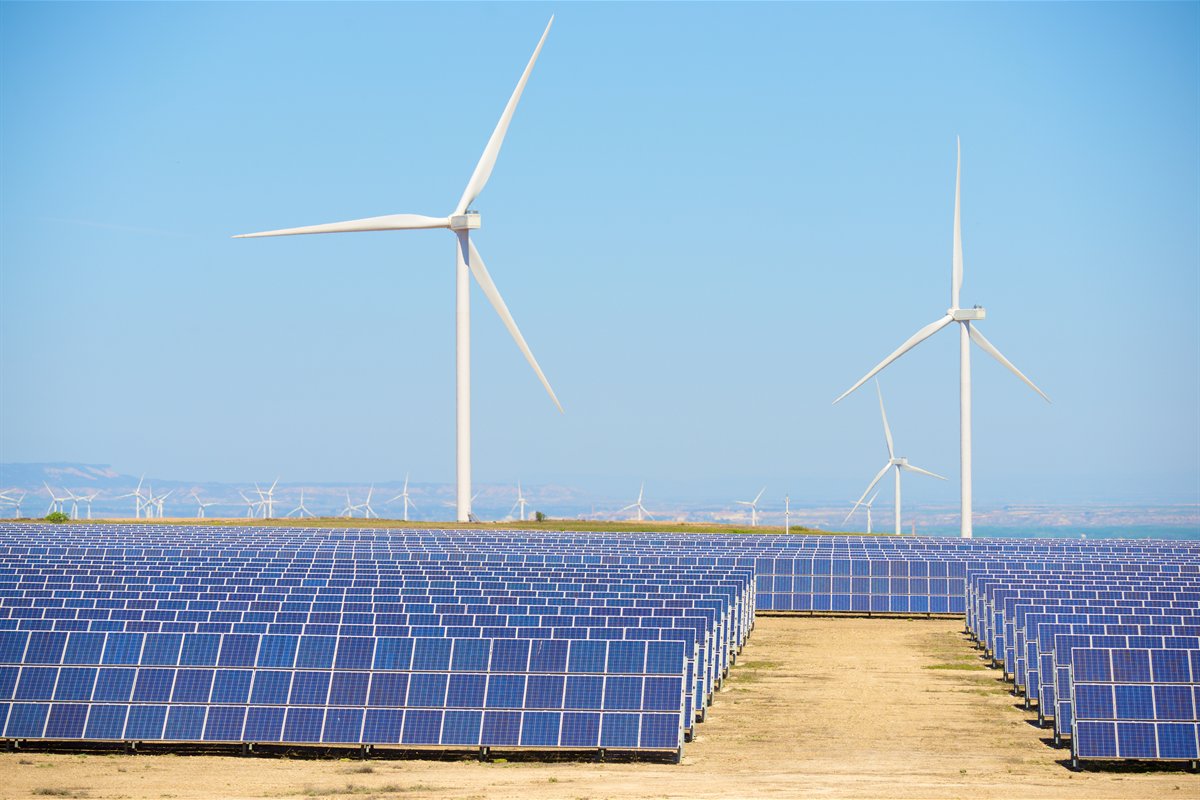
In recent years, North Macedonia has made significant progress in generating electricity from renewable energy sources.
According to the Energy Regulatory Commission, electricity generation from photovoltaic installations increased from approximately 853 gigawatt-hours in 2024 to 1,180 gigawatt-hours in 2025, representing growth of nearly 38%.
By the end of 2025, the country had 963 megawatts of installed solar capacity and 146 megawatts of wind capacity. Renewable energy sources accounted for approximately 46% of domestic electricity generation.
This development presents an opportunity that extends beyond supplying electricity to households.
Unlike petroleum products, which must be continuously imported, solar and wind installations can generate electricity domestically for decades. If some of this electricity is used for transportation, we could gradually replace imported petrol and diesel with domestically generated energy.
However, this would require additional investment in electricity networks, energy storage systems, and charging infrastructure. Expanding wind generation and managing electricity demand would be particularly important for charging vehicles during periods when solar generation is unavailable.
This is precisely why energy and transportation should be considered components of a single economic development strategy.
From Manufacturing Automotive Components to Assembling Vehicles
Perhaps the greatest opportunity for North Macedonia lies not simply in using electric vehicles, but in manufacturing them.
Unlike Ethiopia, North Macedonia already has an established automotive components industry. According to the Agency for Foreign Investments and Export Promotion, more than 50 companies operate in the country’s automotive and mechanical engineering sectors.
Companies such as DRÄXLMAIER, Kromberg & Schubert, Marquardt, KOSTAL, and Adient already manufacture components for international automotive producers.
We have workers, engineers, manufacturing facilities, and experience participating in international production networks. Yet we continue importing nearly all the finished passenger vehicles used in our country.
Why should we not explore the possibility of assembling some of these vehicles domestically?
I do not believe North Macedonia should immediately attempt to develop its own automobile brand. A considerably more realistic approach would be to attract an international manufacturer willing to import automotive components for local assembly.
Over time, existing companies could become suppliers of additional components, while workers could acquire new skills in electronics, battery systems, and automotive manufacturing.
Because the Macedonian market is relatively small, such investments would need to be export-oriented from the outset. Furthermore, our trade agreements with the European Union and obligations under the World Trade Organization limit our ability to unilaterally increase import tariffs.
We should therefore consider legally permissible tariff exemptions for manufacturing inputs and investment incentives linked to genuine production, job creation, and knowledge transfer.
How Much Could We Save?
Consider a simple example.
Suppose North Macedonia gradually replaces 100,000 conventional passenger cars with electric vehicles. If each vehicle travels an average of 12,000 kilometers annually and consumes six liters of fuel per 100 kilometers, this transition would reduce annual fuel consumption by approximately 72 million liters.
Assuming an illustrative import value of €0.55 per liter, this would represent approximately €40 million annually in potentially avoided gross fuel-import expenditure.
This is an illustrative calculation, not an official forecast.
The same electric vehicles would consume approximately 204 gigawatt-hours of electricity annually, excluding charging losses. Consequently, the actual economic benefit would also depend on the costs of additional electricity generation, infrastructure, and the vehicles themselves.
However, these investments could create new opportunities for domestic businesses in construction, engineering, electronics, logistics, and vehicle maintenance.
Beyond the economic benefits, electric vehicles would also reduce exhaust emissions. Nevertheless, according to the World Bank, residential heating contributes substantially more to primary PM2.5 emissions than road transportation. Therefore, cleaner transport must be accompanied by measures to improve residential heating and energy efficiency.
Energy Independence as a Strategy for Economic Growth
I believe North Macedonia should develop a long-term strategy connecting renewable energy, electric transportation, and the automotive industry.
The first steps should include expanding charging infrastructure, gradually modernizing public and commercial vehicle fleets, and attracting investors interested in assembling electric vehicles. At the same time, support for domestic suppliers and investment in workforce training will be essential.
Such a strategy must be economically justified, transparent, and export oriented. The objective should not be to establish an industry that remains permanently dependent on subsidies, but to develop competitive companies capable of generating greater domestic value added.
North Macedonia already has an automotive industry, growing renewable electricity capacity, and an ageing vehicle fleet that will need to be replaced in the coming years.
What we lack is a strategy that connects these opportunities.
I believe the next stage of our economic development should focus on creating greater domestic value added. Rather than simply exporting automotive components while importing finished vehicles and fuel, we could gradually develop additional manufacturing capabilities.
North Macedonia may never produce significant quantities of its own oil. However, we can generate more of our own electricity, develop new industries, and reduce our vulnerability to external energy crises.
Energy independence should not be viewed solely as an environmental objective. It should become an integral part of our strategy for sustainable economic growth, job creation, and a stronger domestic economy.